
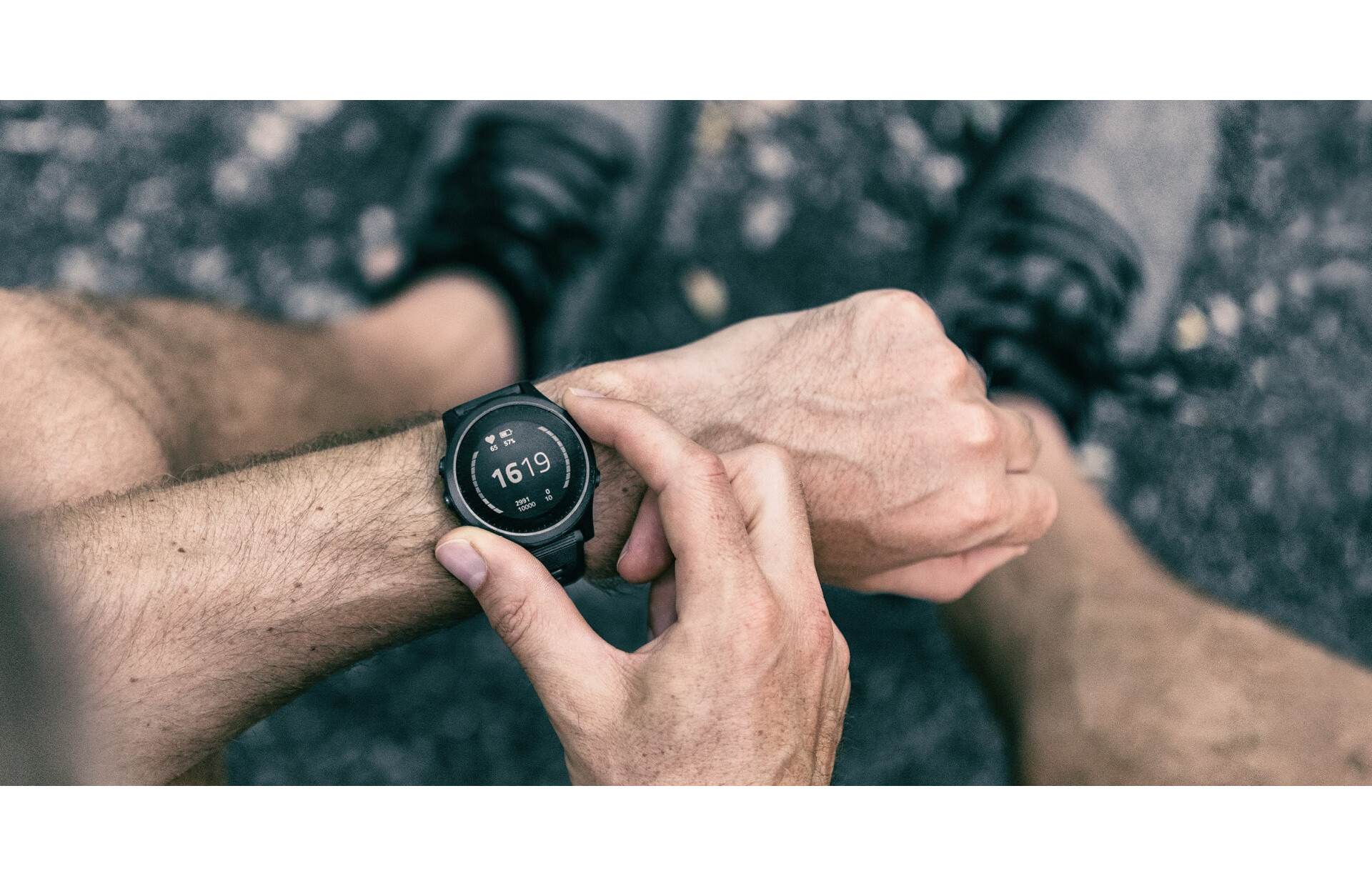
How many calories does running burn? Calculator and examples of kcal burned while running.
The calories mentioned in the title (kcal for short) are one of the key parameters that help you track your progress when trying to lose excess weight. They show the amount of energy your body uses, including during exercise.
What do they actually mean, and how many can you burn while running? Probably everything you need to know about it is waiting for you in this article.
Why count calories?
The rule here is simple. If you maintain a small calorie deficit (meaning you take in fewer kcal than your body actually uses), you can achieve the effects of running in the form of fat loss. Of course, the right level of deficit depends on your preferences, capabilities, training plan, and factors such as your current weight and height. A safe deficit during weight loss is considered to be around 150–300 kcal more burned than your body needs.
Naturally, counting calories can also work the “other way round”, meaning for people who want to gain weight. In that case, it is worth making sure the calorie level stays in an appropriate surplus.

How many calories can you burn while running?
Many sources available online, as well as specialist literature, state that every kilometre you cover lets you burn around 60–62 kcal. Personally, we suggest taking this information with a bit of caution. You need to remember that the exact number of calories burned during a training session or running event depends on several important factors.
- The first is your body parameters, mainly height and weight, muscle mass, and even body fat percentage.
- The second important aspect is, of course, intensity, meaning the speed (pace) at which you cover each section. The faster you run, the more calories you burn.
- Last but not least, there is the distance you cover. There is no mystery here – the more kilometres you run, the more kcal you can burn.
Naturally, your result is also affected by other factors, such as incline and terrain type, air temperature, and even humidity levels.
Calorie calculator - how to calculate kcal burned while running?
As you can see, there is no single clear answer to that question. That is why we will make a few assumptions for the calculations below.
To begin with, let’s assume that an average runner can cover 8 to 10 kilometres in just one hour - in that case, their pace will be from 6:00 to around 7:30 km / h. Yes, yes - we know that more advanced runners can easily manage distances of 12, or perhaps even 15 km. But if you are in that group, you probably already know how to calculate the calories burned during that kind of effort, so this article is probably not for you ;).

How many calories does each kilometre of running burn?
But let’s get back to our example and assume that you weigh 65–75 kg, are 160–175 cm tall, and run 1 kilometre in 6 minutes. Your results may look like this:
- 1 kilometre of running burns 60 calories.
- 5 kilometres of running burn 300 calories.
- 10 kilometres of running burn as much as 600 calories, which is quite a solid dinner.
How many calories does each minute or hour of running burn?
Of course, we can use the same analogy to calculate kcal burned not based on distance, but simply on the minutes spent on this activity. In that case, your results may look like this:
- 15 minutes of running burn around 150 kcal.
- 30 minutes of running let you burn close to 300 kcal.
- 1 hour of running means an energy expenditure of 600 kcal.
Keep in mind that the values given above apply both to classic outdoor running (on asphalt, trails, etc.) and indoor activity, meaning running on a treadmill.

Can you burn more calories while running?
Of course! As we mentioned, the final result depends on many factors. But by far the most important of them all is... your pace. With each training session, you will start to improve not only your endurance and how you feel, and cover more kilometres, but above all - do it in much less time.
That means that instead of running 8, 9, or 10 km per hour, you may easily handle 11, 12, and who knows - perhaps even 15. We hardly need to add that in this way you may burn up to 50% more kcal.
Does what you wear while running affect how many calories you burn?
Choosing running clothing does not have much effect on how many calories you ultimately burn. However, the running shirt or running shorts you choose can play an important role in how you feel during this kind of activity.
When choosing it, follow a few simple rules, including:
- Choose clothing suited to the conditions in which you run. Take temperature into account, as well as general weather conditions (rain, snow, etc.).
- Find the right fit - decide whether you feel better in close-fitting leggings and rashguard shirts, or if you prefer slightly looser options (e.g. a classic running T-shirt).
- Pay attention to workmanship and the materials used. Running clothing should wick away sweat easily and help prevent unpleasant odours.
If you are preparing for obstacle races – be sure to check out our dedicated OCR clothing collections. If you prefer more traditional running, the collections created with road running in mind, for example, will certainly be worth your attention.


