
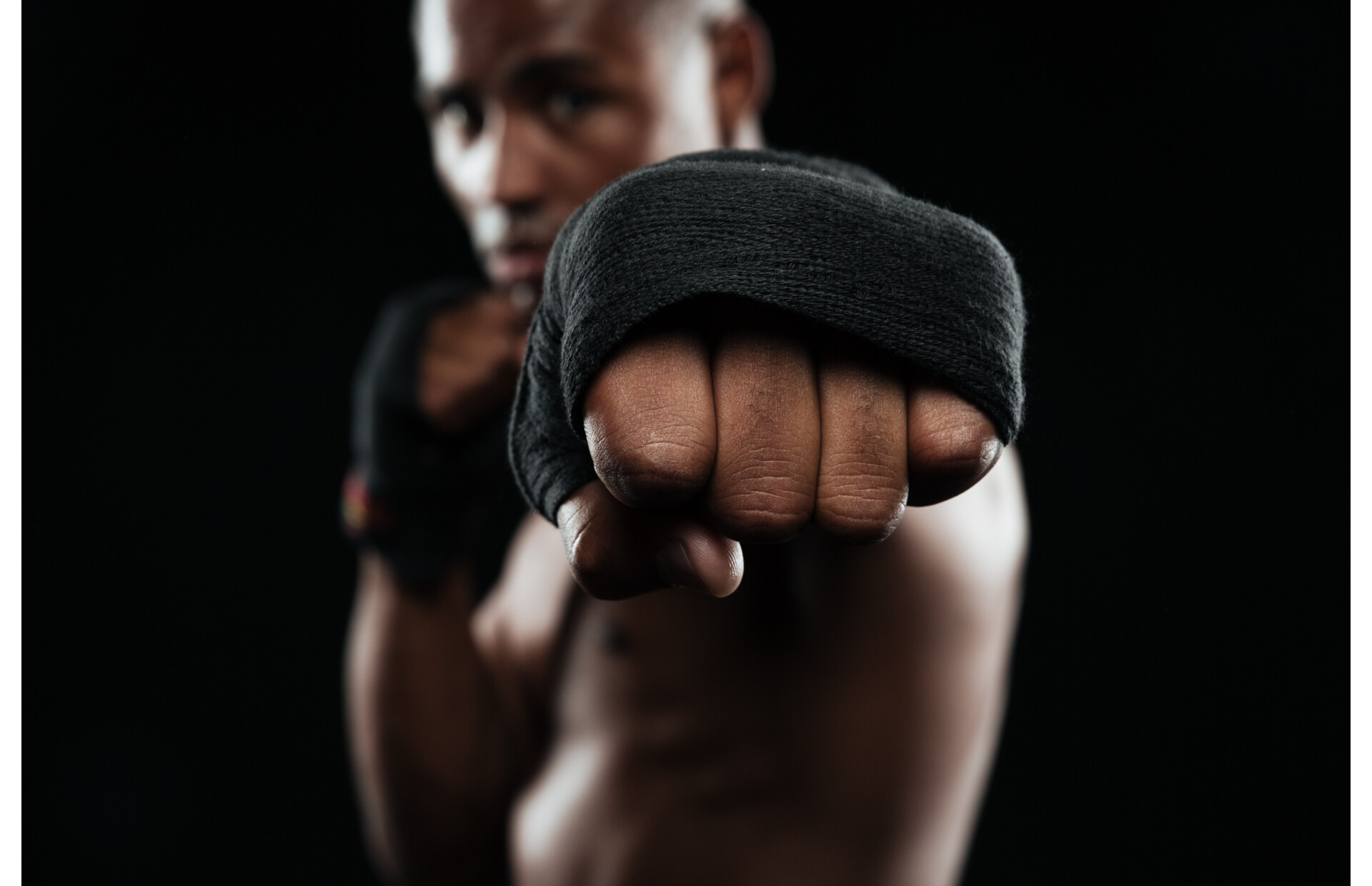
MMA training - what does it look like? Structure, rules, exercises.
In boxing, you use your fists; in kickboxing, kicks are added. BJJ adds groundwork to the mix, and MMA? Well… mixed martial arts take everything they can and turn it into one of the most demanding training systems ever created. Want to find out for yourself?
What does training in mixed martial arts look like from the inside? The structure of a typical session, warm-up, stand-up and ground work, takedowns, sparring and conditioning. Who is it a good choice for? How often should you train and what mistakes should you avoid? We have covered everything important in this article.
What does mixed martial arts training involve? Who is this discipline for?
MMA training (as you can tell from the name itself) is without a doubt one of the most comprehensive systems of athletic preparation among all martial arts known today. It requires athletes to be versatile, meaning they must simultaneously develop punching and kicking skills, wrestling and ground fighting, as well as submissions and chokes.
Its growing popularity means that different groups of people are becoming interested in this form of activity. MMA is no longer just the domain of young, strong men. On the contrary, women, children and even older people are increasingly seeing it as something worth trying.
Why? Because mixed martial arts are not just about competition and “fighting other people”. They can also be treated as a regular physical activity - one that helps you develop, build character, improve your fitness and simply gives you an idea for a hobby or an interesting way to spend your free time.
Where and how should you train? What does a typical MMA training session look like?
A standard training session lasts from 45 up to even 120 minutes and includes different phases. Naturally, for safety reasons, it should always start with a general warm-up and then gradually (depending on the specific plan and stage of preparation) move on to work on specific areas such as technique, strength, striking, takedowns, wrestling, etc. Sparring is also part of the mix from time to time.
It is worth knowing that the structure changes depending on the stage of preparation. Basic training designed to build foundations looks different from training organised just before an official fight.
Warm-up in MMA training
Its job is to prepare your body to work across all ranges at the same time. That is why it is often more extensive than in other, more uniform disciplines. Your body has to be ready both to absorb strikes and to handle throws and ground fighting. No shortcuts.
Start with a run or skipping rope to raise your heart rate and stimulate your circulatory system. Then add elements of shadow boxing, hip and shoulder mobility work, as well as exercises to warm up the neck and spine.
Stand-up training
This includes, among other things, punches (from boxing) as well as kicks and knees (from Muay Thai). The key point, however, is that you must constantly take into account the risk of being taken down, which is not present at all in the disciplines mentioned above. That is exactly why stand-up training has to include a stance that protects you from takedowns and always be done with the awareness that your opponent may enter the clinch at any moment.
Ground training
Two aspects are especially important here: grappling and choking techniques. The first teaches you how to control your opponent and defend against their attacks. The second helps you understand how to protect yourself from their techniques and how to apply finishing techniques yourself. An important aspect of mixed martial arts is landing strikes from a dominant position on the ground, which completely changes the calculation of every position. You need to plan every movement with the threat of strikes in mind.
Takedowns and takedown defence
Wrestling is another key pillar of modern MMA. It is responsible for controlling where the fight takes place. A fighter who can dominate in this area decides where the action will unfold. Training includes, among other things, work on basic takedown techniques, defending against them and working against the cage. Because let us remember that, unlike many other martial arts, MMA fights take place in the octagon.
Sparring in MMA
Without it, you can “only” train MMA, but if you also want to compete, regular sparring with a partner is essential. It is a key part of preparation and comes in several forms, each with a different purpose. So sparring can be:
- technical - lets you focus on specific elements, is light and follows a calm pace,
- fight sparring - as close as possible to a real fight, intense and demanding,
- targeted - focused on a selected area (e.g. stand-up, ground work, etc.),
Remember about safety. Proper gear (mouthguard, headgear, shin guards and hand protection) is an absolute must-have if you want to avoid injury.
Conditioning and physical preparation
Conditioning in MMA is a connected system made up of aerobic endurance, explosiveness, functional strength and resistance to fatigue (especially under stress). If you want to build and refine these qualities, we recommend, among other things, interval runs and long-distance running, kettlebell work, wrestling drills and bag work.
How often should you train?
The optimal frequency for beginners is around 3 to 4 sessions per week. Intermediate athletes can do 4 to 5 sessions weekly, while for fighters preparing for a bout, we recommend training camps that may include even 2 sessions a day… every day.
Of course, it all comes down to your predispositions, experience and current training level, as well as the goals you set for yourself. After all, not everyone trains mixed martial arts to become a professional and compete all over the world. Right?
Mistakes in MMA training - what is best avoided
Moving into sparring too early, especially without building solid technical foundations first, can teach you bad habits. On the other hand, neglecting one area (for example grappling or stand-up) means your opponent will almost certainly try to exploit it during a fight. The same goes for relying more on physical strength at the expense of technique, as well as inconsistency in training.
What should you buy before you start? Dedicated training clothing and accessories.
You need MMA gloves (small, open-finger gloves suitable for typical mixed martial arts training). In addition, you may want to consider buying boxing gloves, which will make bag work easier and above all minimise the risk of injury.
To complete your full kit, you will also need foot and shin guards, a mouthguard and groin guard, headgear, as well as clothing (especially shorts and MMA shirts). The good news is that you can find most of these items in our online store.
We especially recommend rashguards (with long and short sleeves), which are not only comfortable and look great, but above all offer truly legendary quality. As our regular customers note, even after hundreds of training sessions they still look almost new.
MMA without the right gear? It is possible, but… it may be difficult.
So get yourself high-quality accessories and clothing designed specifically for mixed martial arts training. In the SMMASH store, you will find practically everything. If you want to create something specially for yourself, discover the possibilities of the online clothing configurator X-CREATOR. It is a modern and intuitive online tool that lets you design custom sports shirts, as well as other elements of sportswear. Importantly, not only for mixed martial arts.


