

Marathon: distance, time and rules. What is worth knowing about running a marathon?
42,195 metres - that is exactly the distance covered by participants in one of the oldest, most iconic and often most sought-after running disciplines in the world. The marathon (or marathon race) is a true Mecca that virtually all long-distance runners aspire to reach - and not only them.
For some, it is all-out sporting competition. For others, it is a chance to test themselves and see where the limit of their abilities lies. For others still, it is simply a way to spend their free time.
Discover the history of the marathon, the best-known and most respected races, and find out how to prepare to take part in one or several of them!
The history of the marathon - where did this discipline come from?
You have probably heard more than once the story of the famous messenger - Pheidippides - who ran from Marathon (the discipline also takes its name from this town) to Athens to inform the inhabitants that the Persian fleet was approaching, and then... died.
Few people realise that the actual distance between Athens and Marathon was in fact about 37 kilometres. It was “rounded” up to 40 km at the first Olympic Games. The additional 2,195 metres were added during the Games held in London so that the king at the time could watch the finish of the race. And it has stayed that way ever since :).
Why are marathon races so popular?
On the one hand, history is mainly responsible for this. After all, not many disciplines that began in ancient Greece have survived to our times. On the other hand, there is also a certain magical aura connected with the level of difficulty. Nearly 42 kilometres is a challenge that most competitors prepare for over the course of years. For many of them, it is the crowning achievement of their efforts, and even the beginning or end of a certain stage in life.
Its legendary status is also proven by one more fact. The marathon is the final discipline to conclude the Olympic Games. Its winners (those finishing in 1st, 2nd and 3rd place respectively) are awarded directly during the closing ceremony of the Games.
Marathons in Poland and around the world. Which ones are worth taking part in?
Every year, both in our country and across the globe, many events of this kind are organised.
The best-known Polish marathons are, of course: Maraton Warszawski, Poznań Maraton, Cracovia Maraton, as well as Wrocław Maraton.
Among the world’s leading events are several races that, over the years, have become true sporting legends. It would be impossible not to mention the Berlin Marathon, the Boston Marathon, as well as the marathons in New York, Tokyo, Paris, London, Rome and Prague.
The prestige and recognition of these events are proven not only by their prime locations, but also by the consistently strong turnout. Many of them attract even tens of thousands of participants who travel from all over the world. Such huge interest means that not everyone can take part. The Boston Marathon uses qualifying standards, meaning specific times that runners must meet. Other races also frequently use entry lotteries.

Types of marathons - what kinds are there?
If until now you thought that “a marathon is just a marathon” and that all races are the same, a small surprise awaits you. The element that does not change, naturally, is the distance. Official events are subject to strict control by the relevant authorities, which verify the length, the straight-line distance between the start and finish (it cannot exceed 21,097 metres), and even the elevation difference (the difference between the start and finish is a maximum of 42 metres).
- Championship ranking events, which are reserved for professional athletes, and whose participants compete for Olympic, world or European championship titles.
- Road races, in which both professionals and amateurs can take part.
Naturally, individual marathons also differ in other respects. Some competitors value particular events for their visual appeal (routes through interesting parts of cities and beyond). Others pay attention to the shape and character of the courses. Yet another group appreciates the atmosphere created by fellow participants and the cheering crowds.
How long does a marathon take?
Although the distance of this running event is measured in kilometres, the differences in athletic level between competitors, as well as the varied characteristics of individual races, mean that many people pay particular attention to the time in which they manage to complete it.
So far, in official competition, no one has managed to break the magic barrier and run a marathon in under 2 hours. The current world record for this distance is 2:00:35 and was set by Kenyan runner Kelvin Kiptum. The record is quite “fresh”, as we witnessed it on 8 October 2023 during the Chicago Marathon.
For comparison, the previous record was 02:01:09. It was also set by a Kenyan - Eliud Kipchoge - during the Berlin Marathon.
As for women, the world record belongs to Ruth Chepngetich (Kenya), who dethroned the previous leader - Tigist Assefa (Ethiopia). The new women’s marathon world record was set quite recently, on 13 October 2024 during the Chicago Marathon. In doing so, the Kenyan runner beat the previous record by almost 4 minutes and, most importantly, broke the magic barrier of 2 hours and 10 minutes. Her current record stands at 2:09:56.
When it comes to European representatives, the results are as follows:
- Among men, the best result was achieved by Bashir Abdi (Belgium), who ran the Rotterdam Marathon in 2:03:36 on 24 October 2021.
- Among women, Sifan Hassan (the Netherlands) leads the way, having set a record of 2:13:44 at the Chicago Marathon on 8 October 2023.
But let’s be honest - times around 2, 2.5, and sometimes even 3 hours are mainly reserved for true professionals. Achieving such results requires an incredible pace, which in the case of the Kenyan runner is around 2:50 min/km. If you do not believe that is really difficult - try running at that pace and maintaining it for over 40 km :).
In Poland, the title of fastest woman has for more than 30 years still belonged to Wanda Panfil, who achieved the remarkable result of 02:24:18 at the Boston Marathon in 1991. In the men’s category, we are dealing with a somewhat more recent record, set in 2012 by Henryk Szost. He covered the legendary distance in 02:07:39 during the marathon in Otsu.
Unofficial marathon world record
Has anyone managed to run a marathon in under 2 hours? The answer is: yes and no. This exceptional feat was achieved in Vienna by the legendary Kenyan runner Eliud Kipchoge. It took him exactly 1:59:40.
Why unofficial? Because the entire run took place under prepared and controlled conditions. Eliud wore specially designed shoes, ran on a flat course and was led by a pace-setting car. In addition, he was accompanied by a whole group of runners who created an aerodynamic tunnel and changed several times during the run.
The runner’s average pace was 2:50 per kilometre, which translates into a remarkable speed of over 21 km/h. Interestingly, this was his second attempt. The first ended in failure, because on that occasion he covered the full 42 km+ distance in 2 hours, 1 minute and 39 seconds.
What marathon time can be considered good?
Bringing things back down to earth - it can safely be said that any result under 4 hours (for men) and 4.5 hours (for women) is already very “OK”. That is roughly the pace at which nearly half of marathon participants complete their races.
Of course, it is worth remembering that for many people a marathon is something more than just competing with other runners or trying to chase records (even personal ones). For most, it is above all a battle with themselves - overcoming their own barriers and, above all, proving to themselves that almost anything is possible.
Who is the marathon for? Who can take part?
The wide range of finishing times in this race (from 2 to as much as 6 hours) means that a marathon is practically for everyone - regardless of age, gender, background and many other factors. Of course, there are a few conditions that need to be met before you can even dream of covering this distance. These are:
- First - health status. A marathon is long and demanding, so you need to consider whether taking part in such an event could expose you to additional health consequences.
- Second - training level. If until now your longest run has been 5 or 10 km - we have bad news. Marathon running is a completely different league and one you simply have to prepare for.
- Third - a “strong mind”. And we do not mean how you behave “after a few drinks” :). 4, 5, and sometimes even 6 hours of continuous effort is also a real test of your mental endurance.
How do you prepare to take part in a marathon?
Preparing for a marathon is a very complex matter. It should take into account your predispositions, the result you want (or can realistically achieve), and the time left until your planned start. Due to the nature of such races, training should primarily include long runs (ranging from several to several dozen kilometres). Only occasionally is it worth supplementing them with shorter and more intense runs. Preparing for a marathon also involves the right diet, proper recovery, and even choosing the right outfit.
This topic is important enough that it deserves a separate, more extensive and detailed article, which will probably appear on our blog very soon as well.

What shoes should you wear for a marathon?
Because marathons are mainly run on hard surfaces (usually asphalt), and given the distance itself, the best choice is footwear with a high level of cushioning.
A sufficiently high and properly matched sole not only helps you achieve better times, but above all reduces impact that can lead to micro-injuries and, consequently, to more or less serious injuries. When choosing them, pay attention to elements such as:
- Size - during prolonged effort (and that is exactly what a marathon is), your feet may swell. That is why you should consider buying shoes at least half a size (or a full size) bigger than what you wear every day. When choosing, pay attention not only to the insole length, but also to the width of the whole shoe.
- Cushioning - make sure the sole of your chosen shoes has the right height and, most importantly, the level of cushioning that will give you comfort during activity as well as protection against injury.
- Weight - this is a factor that is particularly important for more advanced runners. If you want to achieve better times (for example around 3 hours), you may consider giving up some cushioning in exchange for greater lightness.
What should you eat before, during and after a marathon?
If you are planning to start in such a race, you are certainly aware that covering more than 42 kilometres means a very high energy expenditure. Therefore, a few hours before the start, eat a proper but easily digestible meal rich in carbohydrates (a source of energy). About 40-60 minutes beforehand, limit yourself to snacks, and afterwards replenish only fluids.
During the run itself, try to drink water or other beverages regularly. In addition, you can fuel yourself with light and easily digestible foods, for example in the form of energy gels.
The number of calories you burn during such a run will be huge (from 1000 up to as much as 4000 kcal!). Therefore afterwards, you can allow yourself a really substantial meal to make up for the deficit and, additionally, reward yourself for your effort :)!
P.S. More advanced runners begin so-called carb loading even a few days before the planned start.
Sportswear for a marathon - what should you remember?
When it comes to the clothing needed to complete a marathon, proper footwear definitely plays the leading role. However, it is also worth remembering other items of clothing that can improve your results and make sure you feel fully comfortable during the effort.
As the upper part of a marathon outfit, a slightly looser T-shirt will work perfectly, giving you excellent ventilation and temperature regulation while also wicking away moisture. For the lower part, fitted shorts or short leggings will be ideal, as they will not restrict your movement.
-
 SHORT RUNNING AND OCR LEGGINGS RUNNING AND OCR LEGGINGSAs low as €26.99 Regular Price €62.90
-
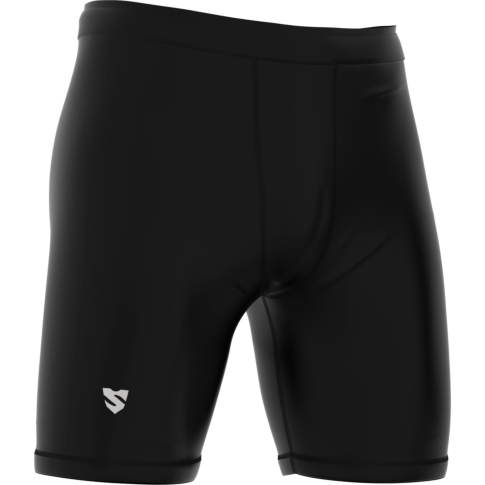 SHORT RUNNING AND OCR LEGGINGS RUNNING AND OCR LEGGINGSAs low as €26.99 Regular Price €62.90
-
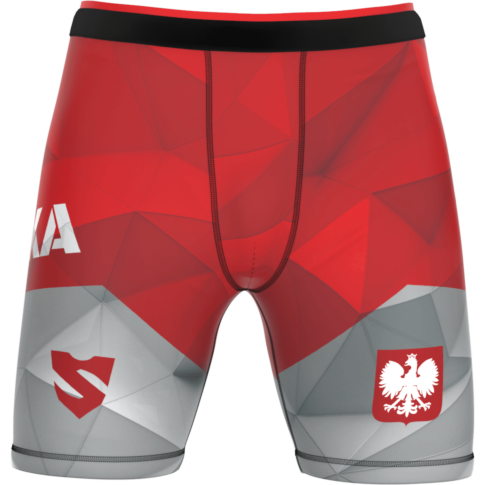 SHORT RUNNING AND OCR LEGGINGS RUNNING AND OCR LEGGINGSAs low as €26.99 Regular Price €62.90
-
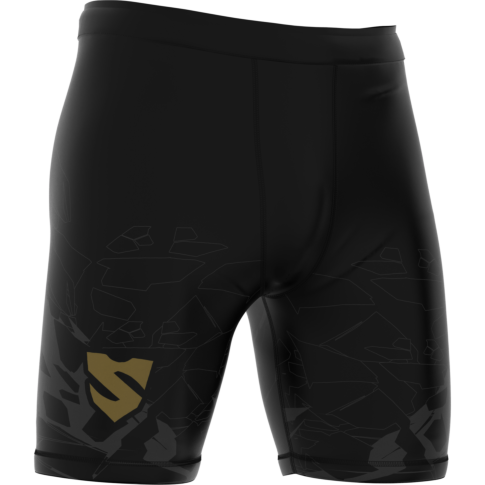 SHORT RUNNING AND OCR LEGGINGS RUNNING AND OCR LEGGINGSAs low as €26.99 Regular Price €62.90
-
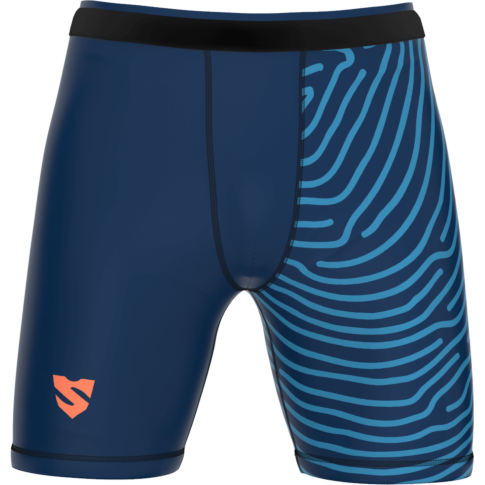 SHORT RUNNING AND OCR LEGGINGS RUNNING AND OCR LEGGINGSAs low as €26.99 Regular Price €62.90
-
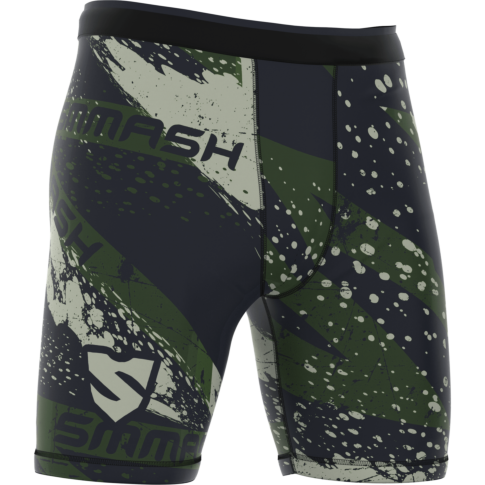 SHORT RUNNING AND OCR LEGGINGS RUNNING AND OCR LEGGINGSAs low as €26.99 Regular Price €62.90
-
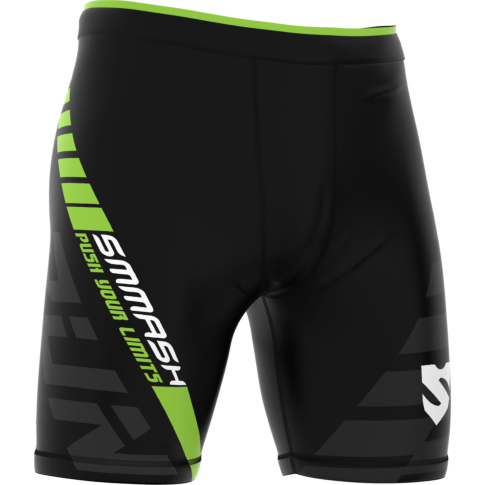 SHORT RUNNING AND OCR LEGGINGS RUNNING AND OCR LEGGINGSAs low as €26.99 Regular Price €62.90
-
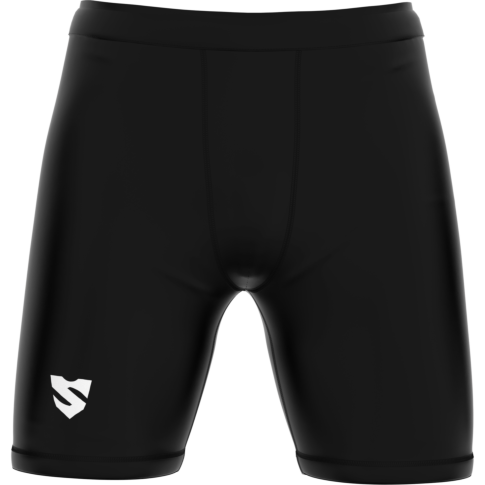 SHORT RUNNING AND OCR LEGGINGS LEGGINSY DO BIEGANIA I OCRAs low as €26.99 Regular Price €62.90


