

Trail running – what is worth knowing about off-road running?
Trail run, cross country or simply off-road running. All these names refer to an interesting sports discipline that involves covering routes marked out beyond classic streets and other hardened surfaces. If you enjoy spending time in nature, are not put off by uneven ground, the need to tackle climbs, and sometimes contact with water or mud, everything suggests that cross-country running is definitely something you should look into.
Read on to learn the key information about this type of activity. What is it, who is it for, how should you prepare physically, and what clothing is worth taking care of?
What is trail running all about?
Trail running, as the name itself suggests, is a type of physical activity that involves moving along sections marked out on forest paths, mountain trails and other off-road routes - sometimes far away from any civilisation ;).
This kind of cross-country running is a great opportunity to take care of your health, fulfil your sporting ambitions, and also to visit exceptional places. Yes, you read that right! Because they take place away from the noise of the city, trail runs let you visit and admire remarkable locations and, as a result, enjoy unique natural surroundings.
What challenges await you during off-road running?
This mainly depends on the place where you intend to train or where the selected trail race takes place. Trail running can take place both on flat sections, where the main challenge is primarily the distance, and on mountainous or hilly terrain, where demanding uphill sections are the key aspect.
On the other hand, the most fun comes from cross-country runs whose arena is a mix of flat and hilly terrain - ideally enriched with forests and other natural obstacles.
Similarly to cross-country races, routes of this kind may also include natural obstacles. However, while in cross-country races they are usually an indispensable part of the challenge, in trail running they may appear, but they do not have to.
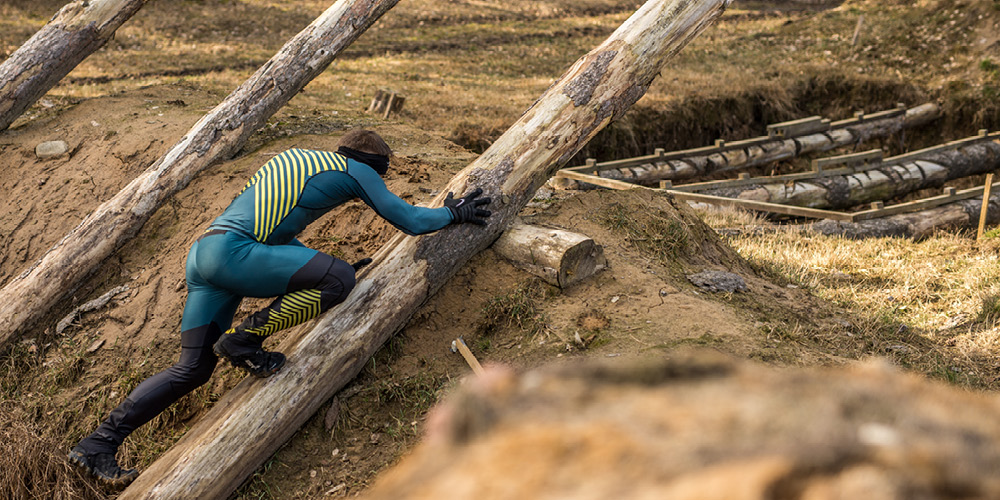
The most common challenges include rocks, roots, trees, bushes, tall grass, marshes, but above all – killer climbs and demanding descents, which can wear out even the most battle-hardened runners.
How many kilometres are covered during trail runs?
Another thing that trail running has in common with cross-country racing is the variety of distances. Specifically, trail run can refer to:
- Short and relatively fast runs - held over distances of 5, 10, 15 kilometres.
- Medium-distance runs, with routes ranging from 20 km to marathon distance.
- Long runs above 40 km, which are classified as ultra events.
Who is trail running for?
To be completely honest – this discipline has practically no limitations related to age or current sporting level. If you are just starting out, you can successfully begin your adventure by covering short distances on terrain that is not too demanding.
As your abilities grow (fitness, technique, strength, etc.) - you can move to the next levels, taking on not only longer but also more difficult routes.
What should you take care of before starting your off-road running journey?
The lack of an entry barrier does not mean that you can start cross-country running without any preparation at all. To enjoy this discipline, first of all it is worth getting the right outfit (which you can read about below). An important aspect is also endurance preparation (especially if you want to run on climbs), as well as technique (which comes in handy when covering demanding sections).
What should you wear for a trail run training session or race?
During off-road running, comfort and safety matter most. To take care of both, you first need to choose durable and comfortable shoes matched to the terrain you intend to run on. Due to the variety of surfaces, which may be partly hard and stable, partly muddy, and partly very slippery, the best solution is footwear with an aggressive tread. Cushioning also matters here, and it should be matched not only to the type of terrain but also to the distance covered (the longer the distance, the greater the cushioning).
Another important aspect is the trail runner's clothing, meaning the upper and lower part of the outfit. These are worth matching not only to the season but also to the conditions awaiting you on the route (choosing short or long sleeves and leg lengths, as well as several layers if the temperature outside is not favourable).
If you are looking for running clothing that will also work well for cross-country running, visit our SMMASH online store.


