
MMA fighting techniques – types, phases and ways of applying holds
Every self-respecting fighter, as well as an “ordinary” fan of the sport, simply has to know the basics of competition in the octagon. Today, we’ll take a closer look at them.
Which fighting techniques dominate in the stand-up, clinch and ground game? Discover the most popular methods used by mixed martial arts fighters.
What are techniques in mixed martial arts?
MMA (short for Mixed Martial Arts) is a sport that draws from many martial arts at once – boxing, Muay Thai, kickboxing, wrestling, judo, Brazilian jiu-jitsu, sambo, karate and several others. Each of these disciplines has brought its characteristic techniques into MMA, and the fighter selects and combines them depending on the specific situation in the cage.
What MMA is, we described in a separate article. In this one, we’ll get straight to the point – discussing fighting techniques in the cage.
Stand-up, clinch, ground – what’s worth knowing about them?
Before we “dig into” specific techniques, let’s first briefly outline each phase in which MMA competition takes place.
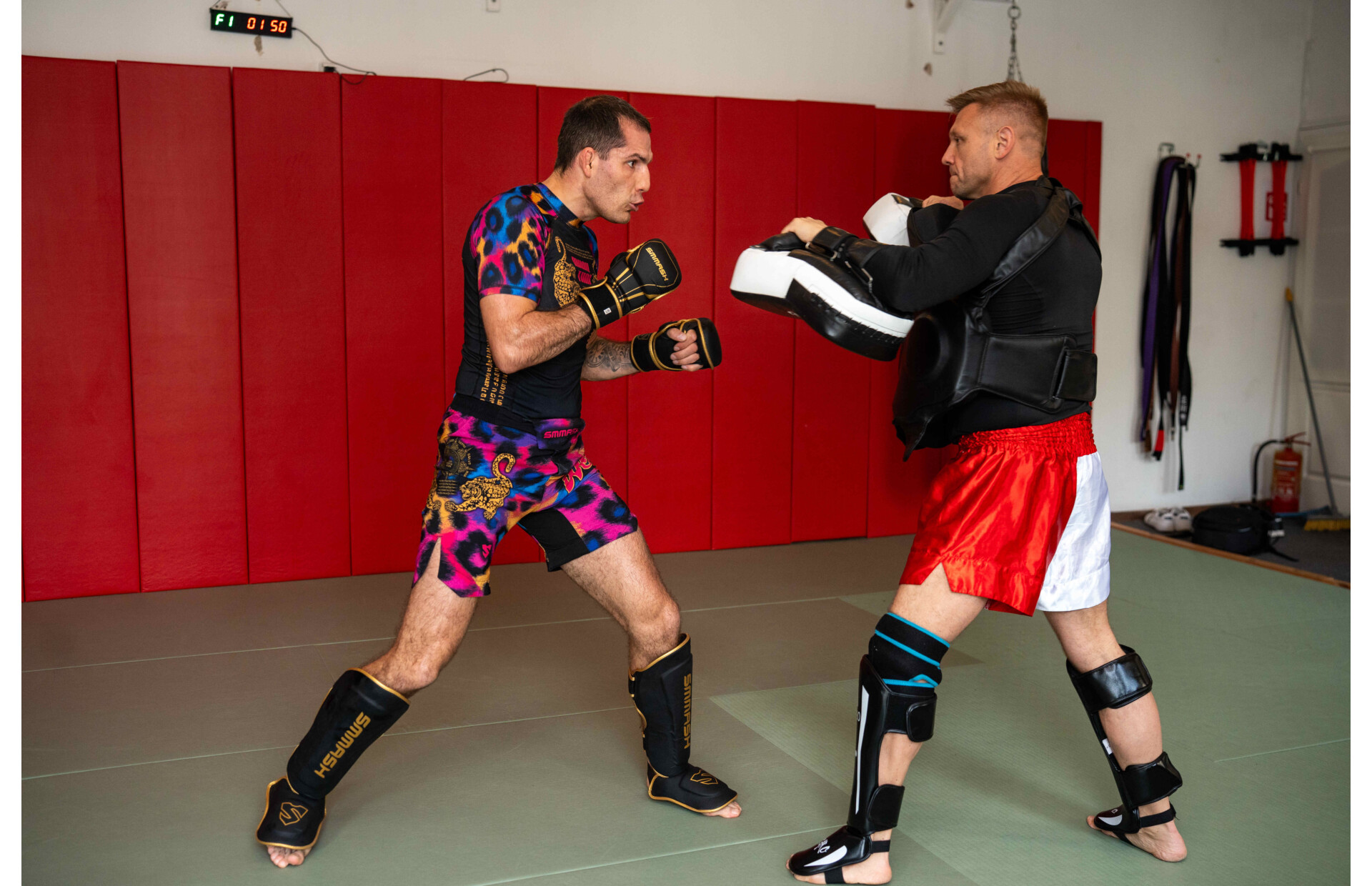
- Stand-up – this is fighting in a standing position, at a distance that allows punches and kicks. Boxing, kickboxing and Thai boxing techniques dominate here, meaning punches and kicks. It is the most spectacular part of a fight and also the one that most often ends in spectacular knockouts.
- Clinch – this, in turn, is close range, where the fighters grab each other. They fight for positional control, try to land knees or elbows, or set up a takedown.
- Ground – this means competition after one of the fighters has been taken down to the mat. In this area, techniques taken from wrestling, judo, BJJ and sambo come to the fore.
Transitions deserve a separate paragraph. They are simply smooth changes between the stand-up, clinch and ground phases mentioned above. They can be offensive (when a fighter aims to change the phase to one that benefits them) or defensive (when they are defending against a change that would put them at a disadvantage).
Stand-up fighting – what characterises it?
As we mentioned earlier, stand-up is the most spectacular part of a fight and, as a result, also the one most highlighted in the media. It is based on disciplines such as: boxing – precise punches and footwork, Muay Thai – low kicks, knees, elbows, kickboxing – combinations of punches and kicks, karate and taekwondo – dynamic kicks.
Interestingly, the specific nature of MMA forces certain “modifications” to techniques known from other sports. A classic boxing stance is simply too “high” and can therefore easily lead to being taken down. Meanwhile, a classic Muay Thai stance is too static and makes defending against takedowns more difficult.
The clinch in MMA – what is it and what does it involve?
Although the clinch takes place while standing, it is often distinguished as a separate phase between stand-up and ground fighting. The fighters remain in physical contact – in close engagement (while still standing on their feet).
It can be short (exchange of knees, elbows) or long (positional battle against the wall / cage fence*, takedown attempts, control). In this case, the main sources of techniques are: Thai boxing, as well as classic wrestling.
Interestingly, passively holding on to an opponent may result in the fight being restarted in the middle of the octagon. That is why fighters have to keep working at all times – trying to secure takedowns, throw strikes or look for a position for a submission.
Ground fighting – what is it?
This is the phase of fighting in which the fighters are on the mat (usually lying down). Most often, one is on top (occupying the so-called top position), while the other is on the bottom (the so-called bottom position). It also happens that both operate from an equal position (for example, in guard). It is in this phase that most fights are decided by submission. Every ground exchange begins with a takedown.
Ground fighting then includes three main activities: positional control, throwing strikes (mainly by the one on top), and attempts to submit the opponent by means of a joint lock* or a choke**. That is why the advantage on the ground belongs to those fighters who have mastered martial arts such as Brazilian jiu-jitsu, judo and wrestling.
* A joint lock is a technique targeting an opponent’s joint with the aim of forcing a submission (the so-called tap out) through pain or the risk of permanent injury.
** A choke focuses on the neck and is also intended to make the opponent “tap”. Less often, situations occur in which a competitor holds on until the very last moment and then… loses consciousness.
In both cases, the referee has an extremely important role, as they must know when to intervene and stop the fight.
What about you? Do you train MMA and need clothing that can handle every phase of the fight?
Discover the full range of MMA clothing, including T-shirts and shorts designed for intense training in the cage. You can choose from ready-made collections or create your own custom design with your club’s logo or your own graphic.
P.S. If you have questions about the offer or need help choosing, write to us – we’ll be happy to advise you.


