
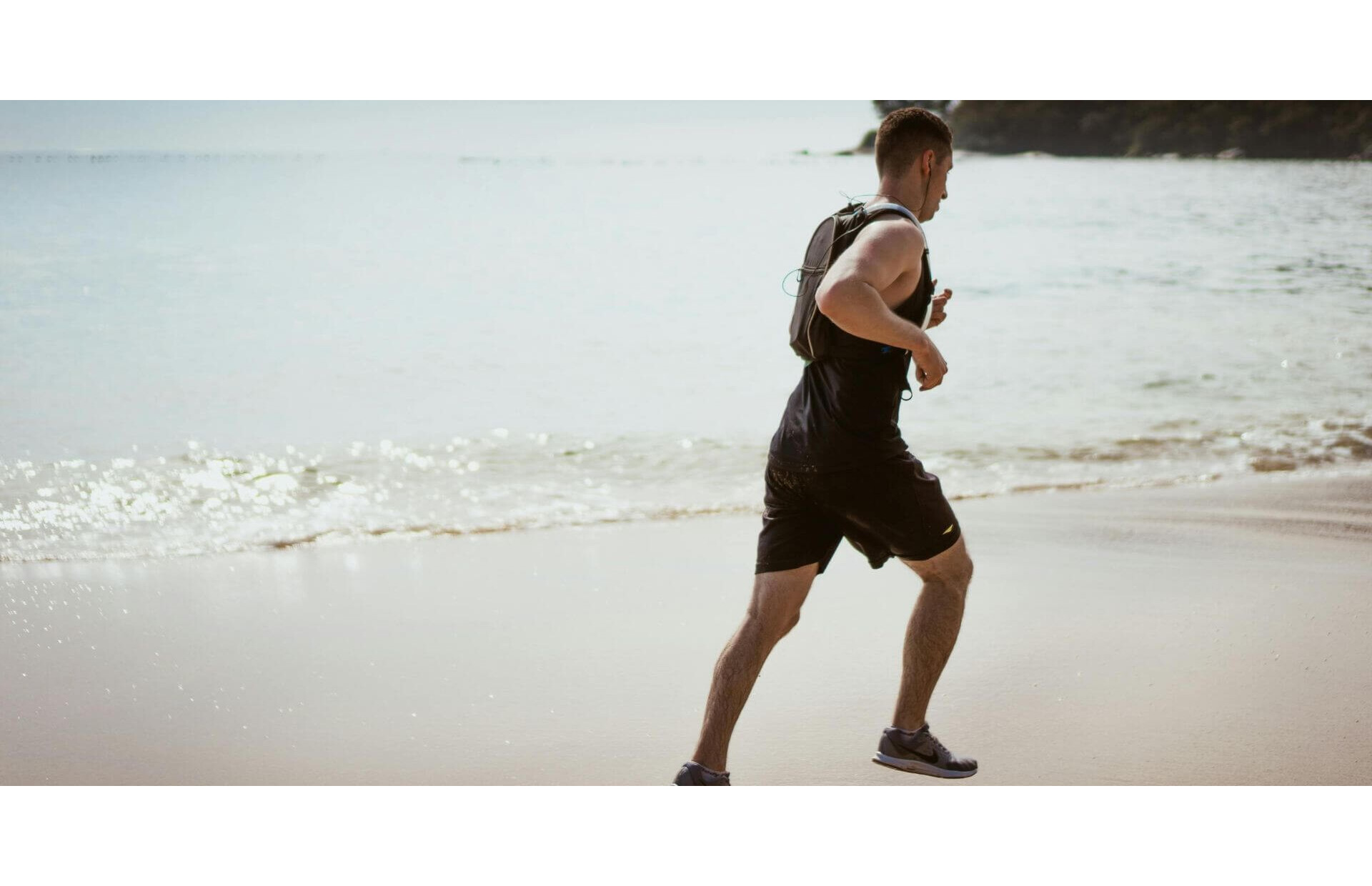
Running in Summer: What to Wear and How to Train in the Heat
Good weather, no clouds and pleasantly strong sunshine. You could say: “summer at its purest”. While others are sunbathing, having barbecues in the garden or simply relaxing in the shade, do you want to stay in shape and maintain good fitness? You should remember that running in these conditions (that is, in the heat) has its advantages, but also some downsides worth keeping in mind.
Find out what is worth paying attention to so that running in summer is not only safe, but also enjoyable and brings specific training benefits.
Running in the heat: is it worth it?
To make this clear, in the following parts of this article we will focus on a “typical” summer, when the sun shines practically all day and average temperatures range from 20 to even over 30 degrees Celsius.
In these circumstances, as you can probably imagine, this physical activity is quite different from running in more moderate conditions (for example, in spring or autumn). High temperatures make your body heat up faster, lose much more fluid and, as a result, make you tired much sooner.
Of course, there is no shortage of runners who feel like a fish in water in these rather “extreme” conditions. But let’s be honest: for most people, heat has more of a negative effect.
To answer the question in the heading above: yes, it is worth it. As long as you take care of a few important elements that will make running not only effective, but above all safe for your body.
What is worth keeping in mind?
When running in summer (just like at any other time of year), two main aspects matter: safety and comfort. To take proper care of them, start with good preparation, taking into account:
- First: clothing. you will find complete sets of this type of clothing in our online store. If you prefer sleeveless tops (so-called tank tops) go for it! They also work very well as a running outfit. In that case, remember to apply sunscreen to your shoulders :).
- Second: eye and head protection. Bright sunshine not only limits your field of vision and causes mild eye discomfort. In extreme cases, it can lead to heatstroke. That is why, to minimise this risk, make sure your summer kit includes sunglasses as well as something to cover your head. This could be a cap, as well as a special scarf, buff, snood or bandana.
- Third: proper footwear. The right size, level of cushioning or type of sole are aspects you are undoubtedly already aware of. But! If you are going to run in high temperatures, remember to also check that your running shoes provide proper ventilation.
It seems we have almost everything covered, except for one extremely important element, namely… hydration. As you have already read a few paragraphs above, running in hot weather causes your body to lose water very quickly. Sometimes literally 15 to 30 minutes of activity is enough to lose a significant amount.
That is why you should remember to bring water with you for every summer workout. You can carry a classic bottle, a bidon or a special backpack equipped with a hydration bladder and tube.
What clothing should you choose for running in summer?
If we are talking about proper summer, meaning one when temperatures often or almost always exceed 20, 25 and even 30 degrees Celsius, the answer can only be one. When choosing, you should focus above all on comfort, breathability and effective moisture wicking.
That is why the best outfit for this activity is a set consisting of shorts and a short-sleeved running shirt. You can choose a fitted rashguard or a tank top. However, we especially recommend a light shirt with a slightly looser fit*, which will give you even better ventilation. As for shorts, we recommend short tights that fit close to the body and therefore give you full freedom in every movement.
* One that, unlike compression clothing, does NOT cling to your body.
What running shoes for high temperatures?
When it comes to running shoes for summer temperatures, pay attention to 2 elements:
- The right size and cushioning - to ensure freedom and safety. Choose the size so that your toes can move freely inside the shoe (of course, without overdoing it and using common sense). The level of cushioning, on the other hand, should be matched to the type of terrain and the distances you usually cover.
- Ventilation - to prevent your feet from overheating. Check whether your shoes have mesh and other openings that allow air and moisture to escape effectively.
How much water should you drink when running in high temperatures?
We recommend 2 solutions:
- For short workouts (for example, 30 to 60 minutes): take between 150 and 500 ml of water with you. In this case, we recommend using a special soft flask*, which you can place in your running belt.
- For long runs (more than an hour): equip yourself with 1, 2 or even more litres of water. In this situation, the optimal solution will be a running backpack with a hydration bladder.
* A soft flask is a special type of silicone or rubber bottle that gets smaller as the amount of water inside decreases. As a result, it eliminates the effect of water “sloshing” around inside and therefore improves training comfort.
Tip: many experts argue that water should be taken in small amounts (for example, by sipping) throughout the entire activity. And not only when you are already thirsty.
Does it make sense to run shirtless?
If we are talking about really intense heat, yes, running without a shirt can help you get rid of not only sweat more quickly, but also lower your body temperature. On the other hand, it may expose you to sunburn.
Remember that this type of “outfit” should be suited not only to weather conditions, but also to the occasion (that is: the place). Just as it may work on the beach or in a secluded spot, running bare-chested will not be seen too positively, for example, in the city.
How to run on hot days? 5 key rules.
Now that we have covered everything you need to prepare, it is time for a series of practical tips and recommendations. For your convenience, we have gathered them into a short and specific list.
1. Check the conditions “out there” and adapt your clothing to them. Take into account the temperature, humidity and whether they may change during the activity.
2. If the sun is beating down strongly, apply sunscreen. Plan your route so that most of it runs through shaded areas.
3. Bring something to drink (preferably water) and try to drink at least several times during this effort.
4. Heat is not something to take lightly, so remember about safety. Even if you feel great, intense sun and high temperatures can cause weakness and even loss of consciousness. That is why you should try to follow at least one of these rules:
- Run with other people. These can be other runners or people cycling alongside you.
- Do it in places frequented by other people. If “something” happens to you, there is a good chance you will get help, even from a stranger.
- Always carry a charged phone with you. Also, before you go out to train, let your family or close ones know where you are going to run and how long it will take.
5. At the end of your workout: wait until your body cools down and returns to its normal temperature and, in addition, remember to stretch.
Tip: unless your training is part of preparation for a competition that takes place in similar conditions, observe how your body reacts and try not to push the pace. Physical effort itself, when it is really hot outside, already poses a major challenge for your body.
When to run in summer? Best times and hours for physical activity.
Avoid running at midday, when the sun is at its highest and, as a result, the heat coming down from the sky can simply be dangerous for you.
For this type of activity, choose hours when it is a little cooler. For jogging or faster running workouts, the morning hours (up to 9:00 at the latest), the late afternoon and also the evening work much better. At this time of year it gets dark much later, so your summer running sessions can stretch until 20:00 or even 21:00.
If these times do not fit your daily routine, consider running “indoors”, specifically on a treadmill. After all, you can do that not only in summer, but also in any other season of the year.
Where can you find clothing for running in summer?
Start building your summer sports outfit with a running shirt and a pair of comfortable running shorts. You will discover plenty of design and colour options in our SMMASH online store. Take a look and decide what you are going to wear for the next kilometres, this summer and the ones to come.


