
Slow jogging: what is it? Results, benefits and training
What is slow jogging?
Slow jogging is a running method based on moving at a slow pace, sometimes even similar to walking. Its creator is considered to be the Japanese professor Hiroaki Tanaka. Unlike classic running (which is often intense and demanding), its goal is to maintain maximum comfort and enjoyment. No gasping for breath, side stitches or excessive muscle strain. Thanks to this method, you will improve your fitness, burn fat, strengthen your heart and circulatory system and, at the same time, avoid injuries and overload.
What are the differences between running, jogging and slow jogging?
In reality, it all comes down (simplifying a little) to two words: pace and intensity. And although each of these concepts refers de facto to the same activity, in practice they differ greatly from one another. So:
- Running usually means moving at a pace of between 3:00 and 6:30 min/km. The ranges between 3 and 4:30 are reserved for really experienced runners. Heart rate fluctuates between zones 3 and 5 (depending on intensity), and all of this is accompanied by sweat, the body overheating and accelerated breathing.
- Jogging is a gentler variant. In this case, the pace usually stretches to 7, 8 and even 9 minutes for each kilometre covered. Heart rate is clearly lower (rather closer to zone 2), and the body itself works at an easier pace, more calmly and with slower breathing.
Slow jogging means even more ease. Here we are talking about a “dizzying” pace of around 10, 11 and sometimes even 12 minutes per kilometre. In fact, it can sometimes resemble a brisk walk or race walking. It is also characterised by a very low heart rate (zone 1 and at most 2), comfort and ease, thanks to which you can breathe calmly and even talk.
Who is slow-paced jogging for?
It probably will not be surprising if we say that it is a discipline for everyone. It does not matter how old you are, how much you weigh or what shape you are currently in. Slow jogging is a good option for complete beginners, older people and also an interesting way to vary activity for advanced runners (who use it, for example, as a form of active recovery and to build the so-called aerobic base).
It is also appreciated by overweight people who, because of the extra kilos, cannot afford classic running, which puts strain on the joints.
How do you start practising slow jogging?
Getting started seems very simple. But even so, we are going to share a few tips with you :)
- Forget about sporting ambitions and assume that this is NOT a race. Do not look at others or try to compete. Your only task is to cover the next metres at a pace that feels completely comfortable for you.
- Control and always keep an eye on your heart rate. Keep it at a level that allows you to breathe freely and hold a conversation (normally this will be zone 1 and zone 2). Gasping or having trouble breathing smoothly means you are going too fast. To help with this, use running accessories, especially a watch and a heart rate monitor strap.
- Remember to stay consistent and regular. Do not give up and try to run 2 to 4 times a week.
And one more thing. If this is your first time, start with short training sessions, to which you will devote a maximum of 15 - 30 minutes. Over time (and as your endurance improves), you will gradually increase the duration and the distances covered.
Benefits and results. What does it give you and why is it worth doing?
You probably already know that slow jogging is a real source of benefits for your body. However, not everyone realises that it also has many advantages for the mind.
The most important ones are: support for fat burning (and therefore weight loss), improved fitness and endurance (building the aerobic base), protection for the joints and knees (a slower pace means less strain on the body), support for the heart and circulatory system, and stress reduction
How many kcal do you burn during slow jogging?
Calorie burn depends on several factors. It is determined by body parameters (your starting weight and height), as well as pace, distance or simply the time spent training. In fact, these are the same elements that determine kcal “expenditure” during classic running.
So if you want to know specific figures and find out roughly how many you can burn, take a look at our article How many calories does running burn?
What should you wear? Choosing clothing for slow jogging.
Before we finish this post and say goodbye, let’s talk a bit about the right clothing for jogging.
Let’s start with the basics: shoes. When choosing them, be guided by your foot size, the season and the type of surface you are going to move on. For pavements and asphalt, choose shoes with a flat sole, and for off-road activity, ones with a more aggressive tread. Also remember cushioning. The longer the distances, the more you will need it.
Adjust the rest of your outfit to the weather and conditions
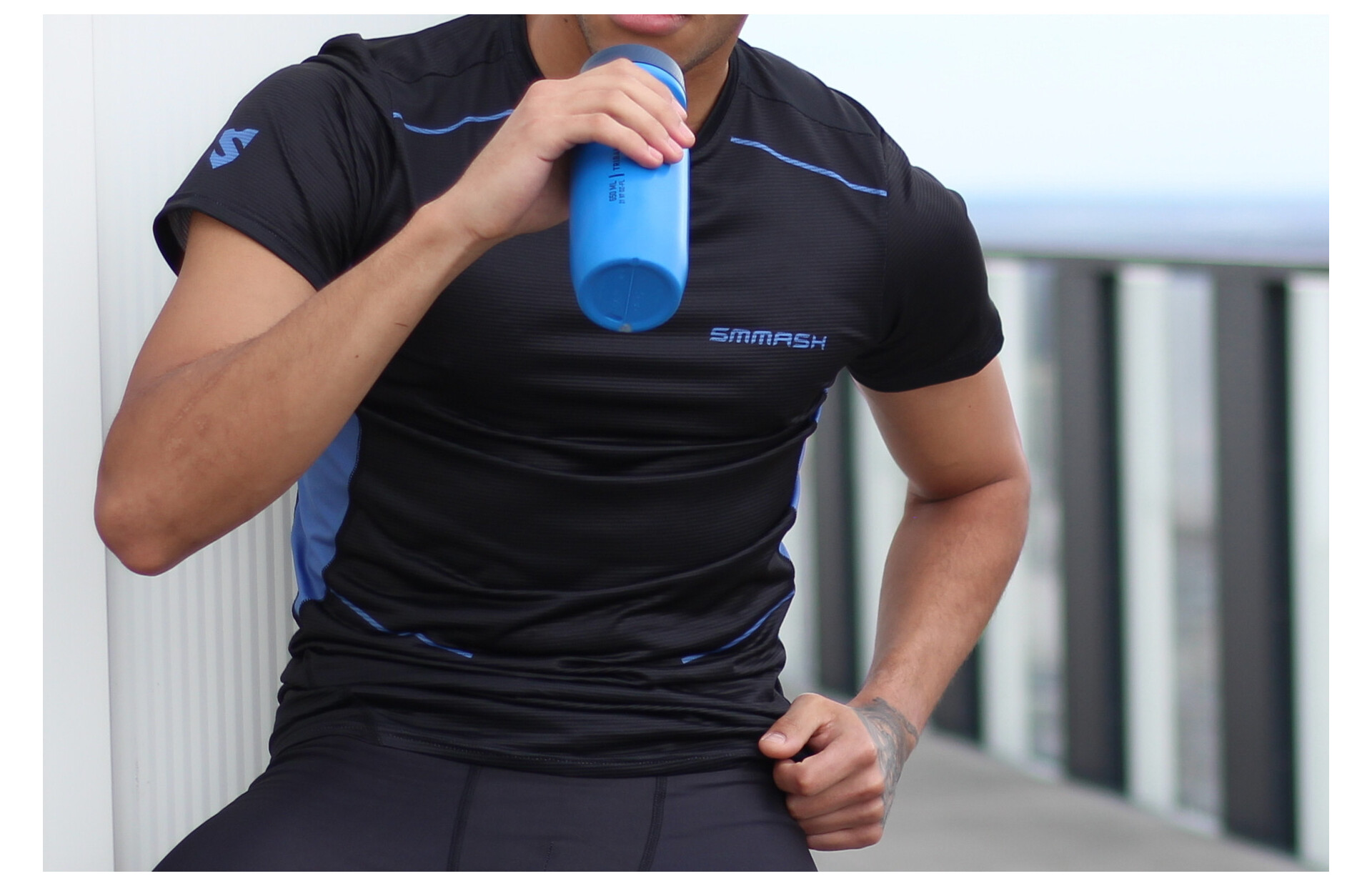
- Is it hot outside? Shorts and a lightweight T-shirt or tank top will work well in hot weather. On the other hand, a long-sleeve rashguard and long running leggings will work when it gets a bit cooler. A typical winter set (for jogging in the cold) also includes a sports jacket, hat, neck warmer and gloves.
You will find all this equipment (except the shoes) without any problem in our SMMASH online store.
Jogging clothing you can personalise
If you are looking for something truly unique and want gear that meets your individual requirements 100%, be sure to try the online configurator. Thanks to it, you can create custom T-shirts, shorts and other garments, all in different variants.


